Keeping dryfire interesting
How much you last practiced isn’t as important as when you last practiced.
One of the Facebook groups I’m a member of is called 1000 Days of Dryfire Challenge. It’s a group whose members have committed to doing my ‘1000 consecutive days of dryfire’ concept. What I found the first time I did the 1000 days was that regularly devising new regimens and switching them around was important to keep the program interesting and avoiding boredom with doing a single regimen all the time.
A regimen I’ve been doing the past few days is a dryfire version of the Federal Air Marshal Tactical Pistol Course. The target I made is a reduced scale triple QIT printed on 11×17 paper at FedEx Office. It’s scaled for 2.5 yards. What I do is print the image from a flash drive on 11×17 paper at FedEx office and set the copier to ‘resize to fit page.’ Resizing is one of the menu options when printing from a flash drive. Feel free to download the image and try it yourself.
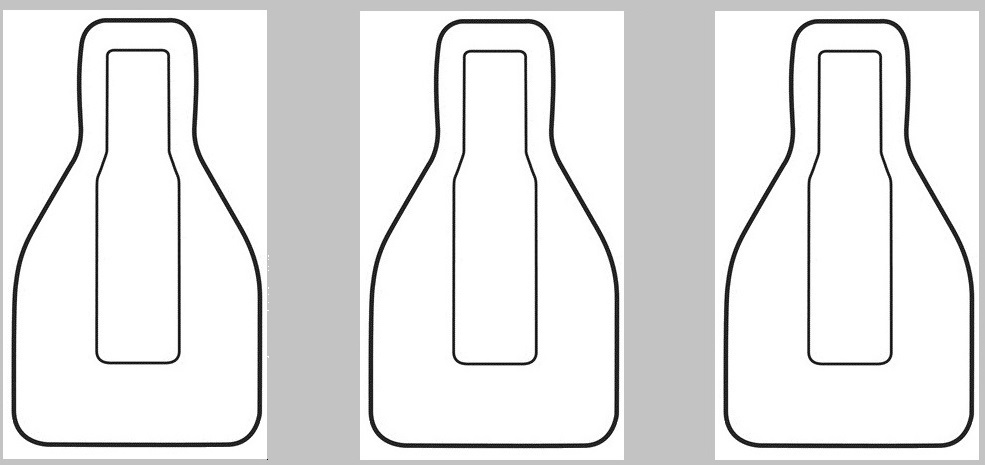 The spacing isn’t quite wide enough on a single piece of paper but nothing is perfect. I punched a hole in the paper at the measured middle point so I can hang it on a picture hanger in the wall. Regular paper tends to sag when hung on the wall, so I stapled it to a piece of cardstock.
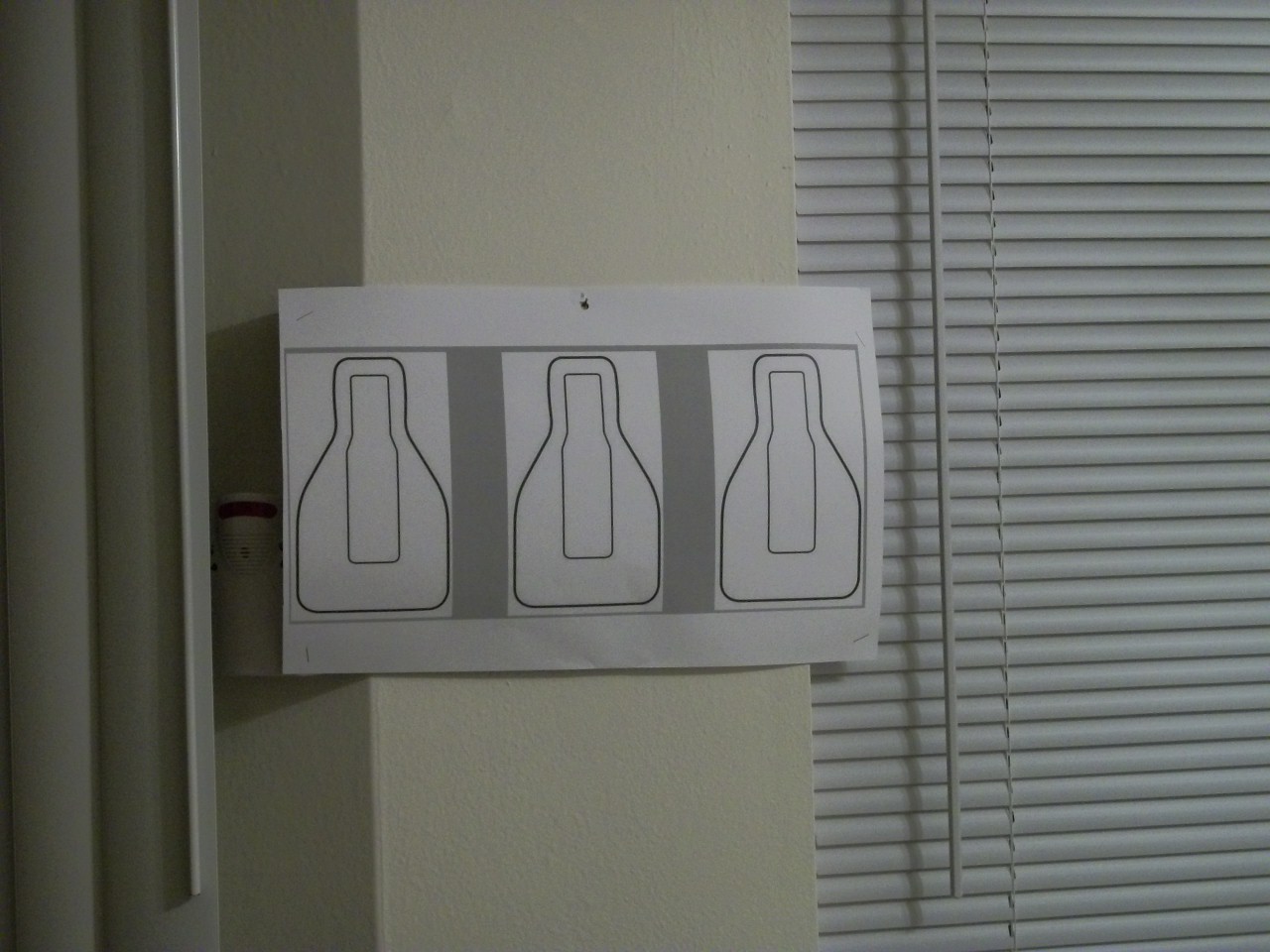 I’m using my SCCY pistol because it’s DAO with second strike capability so I can pull the trigger on almost all the shots. The only one I have to fudge is the final stage because it involves two strings starting with a slide lock reload. I start those strings with the slide locked back, so the first shot is a dead trigger.
Since the TPC is based on Par times, like most police courses, I set the par times on one of my CED 6000 timers. It’s a great training timer, which isn’t made any more, unfortunately. The CED has an option for multiple strings of par time, which makes it easy to set up the multiple string stages. Like most timers, it only sets par times to one tenth of a second, so I round the times down, e.g., 1.65 becomes 1.6 seconds.
Federal Air Marshal Tactical Pistol Course (TPC)
| Drill | Starting Position | Seconds Allowed | Total Rounds |
| One Round (twice). | Concealed Holster | 1.65 (3.30 total) | 2 |
| Double Tap (twice) | Low Ready | 1.35 (2.70 total) | 4 |
| Rhythm; fire 6 rounds at one target; no more than 0.6 between each shot. | Low Ready | 3.00 | 6 |
| One Shot, speed reload, one shot (twice). | Low Ready | 3.25 (6.50 total) | 4 |
| One Round each at two targets 3 yards apart (twice). (Use the outer targets. I go left to right for one string and right to left for the other.) | Low Ready | 1.65 (3.30 total) | 4 |
| 180 degree pivot. One round each at 3 targets (twice). Turn left, then right. | Concealed Holster | 3.50 (7.00 total) | 6 |
| One Round, slide locks back; drop to one knee; reload; fire one round (twice). | Low Ready | 4.00 (8.00 total) | 4 |
QUALIFICATION:
- TIME: Cannot exceed total time for each Drill. Example: Drill #1 – 1st time 1.70 seconds, 2nd time 1.55 seconds; Total = 3.25 seconds = Go. Must achieve a “GO” on each Drill.
- ACCURACY: Target is FBI “QIT” (bottle). Total rounds fired is 30. Point value that hit the inside bottle = 5. Point value touching line or outside bottle = 2. Maximum possible score = 150. Minimum qualifying score = 135.
All stages must equal “GO” to qualify.
This is a fun course that only takes a few minutes to do but tests a number of skills and is fun, at least for me.
Laser sights
I have seen too many people forget the basics and rely on finding the laser dot instead of looking down the sights on pistols. They became much slower with the laser.
So began a Facebook thread in a closed group of ‘operators.’ There’s an antinomy, a form of paradox, in this sort of discussions that I always find interesting.
The paradox arises from the often parroted statement that most armed encounters take place at night or in low light. This premise is less than provable, but let’s accept it at face value for purposes of discussion.

Now, let’s follow up that premise with dismissal of a sighting system because ‘it doesn’t work’ during periods when gunfights are LESS LIKELY to take place.
In this particular FB thread, I will put myself in the category of ‘highly trained,’ since that’s what their membership group supposedly consists of. Years ago, it didn’t take me long to figure out that there were things I could do with a laser on a pistol that I simply couldn’t do without them. That held true even during the day, unless I was on a brightly sunlit ‘square range,’ which is so often said to be a poor and ‘non-realistic’ training environment. In any indoor environment, there is no issue with ‘finding the laser dot,’ even in a well lit room in daylight.
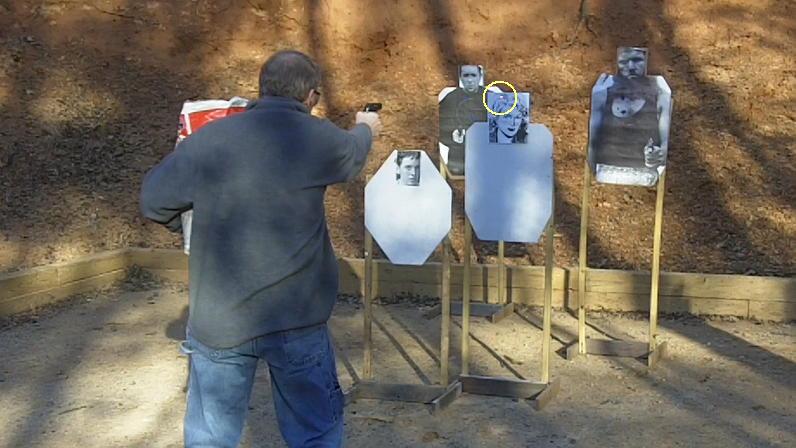
Note visible laser dot.
Once we get into the realm of low light, where the popular mantra says the majority of gunfights occur, most of us will agree that iron sights are fairly useless. We’re largely reduced to point shooting because the sights can’t be seen.
I wondered about the difference between iron sights and lasers during low light. I think of the time frame between sundown and End of Civil Twilight (dusk) as low light. The US Naval Observatory provides specific definitions of these and states
Some outdoor activities may be conducted without artificial illumination during these intervals, and it is useful to have some means to set limits beyond which a certain activity should be assisted by artificial lighting.
Target Acquisition and, to a lesser extent, Target Identification, is still possible during that period. However, between sundown and dusk, night sights aren’t really visible (not bright enough) and neither are the irons (luminous efficacy of the eye’s cones is insufficient).
To establish a quantitative measure for that difference, I chose several parts of the Handgun Testing Program at the elite Rogers Shooting School. The targets were more visible than they show in the video but I couldn’t see the irons. I proceeded to shoot the tests with a laser equipped Beretta. Having taught at Rogers for five years, I’m fairly confident in saying that, without the laser, I would have made the all the body hits (7) and around half of the hits on the number 1 head plate (8) for a score of 15 out of 69 targets. My score with the laser was four missed targets for a score of 65 out of 69.
There’s a reason I have a laser on my house gun.
The issue of parroting something that was heard without questioning, analyzing, or testing is a separate topic that the training community has yet to address adequately. That’s for another time, though.
Grace at Night
[This lady]
“made a list of ten factors that can make an incident traumatic. Eight of the ten happened [in their incident]:1. In your home
2. In the presence of children
3. Prolonged
4. Death and rape threats
5. Guns
6. Theft
7. Beating
8. Shots fired
9. Rape
10. Murder”

One week ago our family went through a harrowing, life-changing experience. This is how my husband described last Tuesday evening in a prayer update:
Last night at about 9:45 pm at our house, Caleb announced to Amy and I as we worked on a paint job in the children’s room that three men had just entered our back door. When I got to the door, I saw two guns brandished among the three criminals. Though we offered all our money and goods to them they beat me and hit Amy twice.
We are praising the Lord that after about 15 minutes wherein they tore the house apart, we were able to chase them away. They took some material possessions, but our lives and honor were spared because of the good hand of our God who placed a wall between our lives and their weapons.
Tomorrow, we are taking a…
View original post 1,710 more words
The Armed Citizen
A writer from Gun Digest contacted me about the Five Year Armed Citizen study TAC 5 year w tables I did a while back. He asked if I would give him a quote about it, so this was my reply.
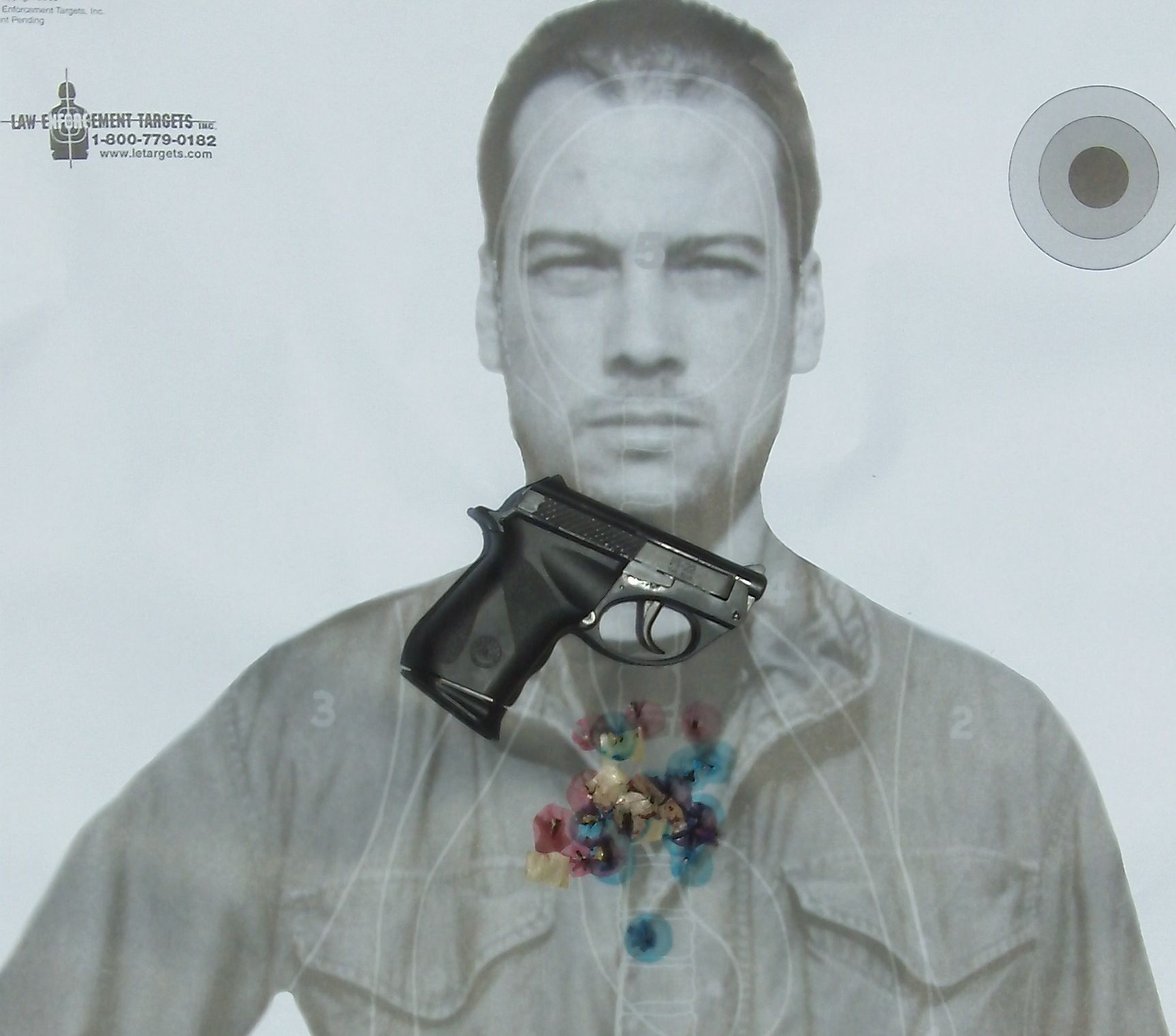
“Analyzing incidents involving Armed Private Citizens, rather than LE/MIL situations, leads to different conclusions. Common discussion topics among Armed Private Citizens, such as equipment and caliber issues, rarely are the cause of Negative Outcomes. Negative Outcomes result from 1) lack of conceptual understanding leading to poor decision-making, and 2) lack of appropriate and necessary skills, techniques, and tactics.
Carrying and being capable of using a small gun adequately will yield much better results than owning a large pistol that isn’t carried or shot well. More criminals have been planted in the ground by .22s that hit than by .45s that miss.”
Negative Outcomes: Self-Inflicted Gun Shot Wounds (Part II)
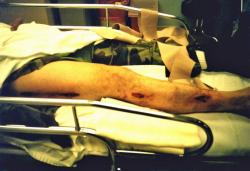
Unfortunately, once we covered up the trigger guard, the path was paved for negligent discharges going back into the holster. Carelessly leaving the finger inside the trigger guard when reholstering will result in the holster helping the finger press the trigger. That’s not the holster’s fault, it’s the user’s.
Be a good instructor
Claude, I really like your blog, I have been a fan and a reader, since I saw it linked over at georgiapacking.org
I’m scheduled to get my NRA certification as a firearms instructor for basic pistol next month.
Do you have any advice for me, in starting out as an instructor?
My main recommendation would be to continuously improve your knowledge and skills. I can’t tell you how many NRA Instructors I know who haven’t
read a single gun book beyond the NRA manuals, have never taken another
class, and who don’t do anything to measure and improve their skills.
My personal library has over 400 books about guns, shooting, tactics, police work, and military history. The subjects run the gamut from appropriate rifles for African hunting in the early 20th century to analyses of the effects of using deadly force by the shooter. My collection has over 100 DVDs in it too. Granted that took me over 40 years to accumulate but it’s indicative of what I try to know about the subject. Many instructors have neither depth nor breadth to their repertoire. They learn one set of skills at a mediocre level and stop there. I see it time and again. That’s a mistake; never stop learning.
I take classes from others regularly, frequently just short evening courses. Those short evening courses are how we are going to begin to reach the majority of new gunowners. And, even if someone else’s class is terrible, like one I took at an indoor range last week, you get important insight about how NOT to do things. Learn from others’ mistakes as well as your own.
With regard to measuring one’s skills, I think it’s important for everyone to benchmark where you are and try to improve that continuously. For an instructor, it’s doubly important. There are a lot of different benchmarks you can use, just having one is the important thing. Shoot it periodically and try to get better at it. You may find that the benchmark you use changes over time to something more challenging and that you have multiple benchmarks that measure different aspects of shooting. One of the main advantages of shooting in competition is that you find out you’re not as good as you think you are. Ego is the Achilles heel of many shooters and instructors.
I also think it’s important to demonstrate drills for the class. Time dependent, it doesn’t have to be all of them, but the first drill and any complex drills should be demonstrated. People are visual learners, for the most part. Telling people how to perform a physical skill is simply not as effective as showing them, IMO. And don’t take your subject matter knowledge for granted about what constitutes a ‘complex’ drill. I have had very intelligent students who couldn’t figure out what the NRA MQP drills were until I demonstrated for them.
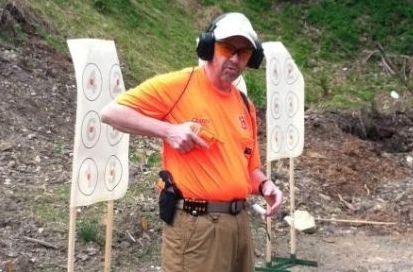
Have an inert gun to do this, where it’s appropriate. If it’s livefire, I use a live gun. If I’m demonstrating gunhandling or tactics, the inert gun comes out. I have both of them on me when I’m teaching.
Most importantly, don’t get complacent about anything. Your skills, safety, communication, etc. need to be at the forefront of your mind whenever you’re teaching. Every story we hear about an instructor having a Negligent Discharge or shooting a student in class has complacency as its root. Complacency is a killer, don’t go there.
Structured shooting is a whole new world for most people. Help them understand it in every way you can.
Gun tests
Taurus Manufacturing has officially released the Curve, a small, polymer .380 pistol with a distinct curved frame, meant to comfortably wrap around your hip or thigh when carrying inside the waistband or in a pocket, respectively.
http://gunsmagazine.com/exclusive-curve-ahead/
Here’s my gripe about ‘range tests’:
First, some quick range notes: After handling and firing the Curve I can straight away can [sic] tell you that the 100 or so rounds I fired through the gun fed well and the empty cases ejected perfectly. The long trigger was decently smooth and the recoil, while sharp, was manageable. And not only was the gun a reliable shooter, it also hit where I aimed, thanks in part to its integrated light and laser.
How much meaningful information does that convey? What distance, what was the target, what speed, what anything? How about putting a trigger pull gauge and ruler to it? Then we might know what ‘long’ means, in a couple of dimensions.
I’m actually interested in doing a comparative test of the Curve. Anything that has generated so much hate without even being seen, handled, or fired deserves a second look. Perhaps I’ll do something even slightly scientific, such as firing it on the same course of fire as a full size gun or perhaps a competitive gun, e.g., an LCP.
If they’re going to fire 100 rounds anyway, why not do something meaningful with it? For example, “I fired the XX State weapons carry qualification course with the Curve and an LCP. With the Curve, I was able to make a score of XX in a time of XX. The LCP gave me a score of XX in XX seconds. So, XX produced better results, for me, than the XX. Then I fired the same course with a Glock 17, which produced XX results. So the smaller guns gave up XX percentage of performance.”
Larry Potterfield, of MidwayUSA, even developed his own analysis protocol for testing handguns. His procedure is not what I would use but I give him credit for doing something original, measured, and somewhat informative.
C’mon guys, this isn’t that hard if you think about it just a bit. You don’t have to put on a Top Gear show to provide some kind of meaningful information for people to use in decision-making.
Rule 4 violations
Firearms Safety Rule #4 – ‘Know your target and what is beyond it.’
Oklahoma City police say a husband accidentally shot and killed his wife thinking she was a home invader early Wednesday morning. There’s no other way to describe this other than a tragedy. It should be noted that their child was in the house, as well. The story is that the child did not witness the incident; I certainly hope that is true.
Sadly, this is not the only incident of this nature in my database. It’s essential that we know what we are shooting at; absolutely essential. There are two possible reasons for this kind of tragic occurrence; 1) lack of forethought and preparation and 2) training scars. I don’t know which one was at fault here but given the small number of people who take any kind of training, my guess is that it’s the former.
Lack of forethought and preparation means when this type of incident occurs, the shooter hadn’t given any thought to the possibility that someone else was home or that a family member might be moving around the house at night. People do get out of bed at night to have a snack, go to the bathroom, or just because they can’t sleep. Anyone who has other people living in their home needs to consider that as a very real possibility. The shooter might not have had a flashlight next to their firearm, either. It’s amazing how many people don’t have any flashlight at all in their home.
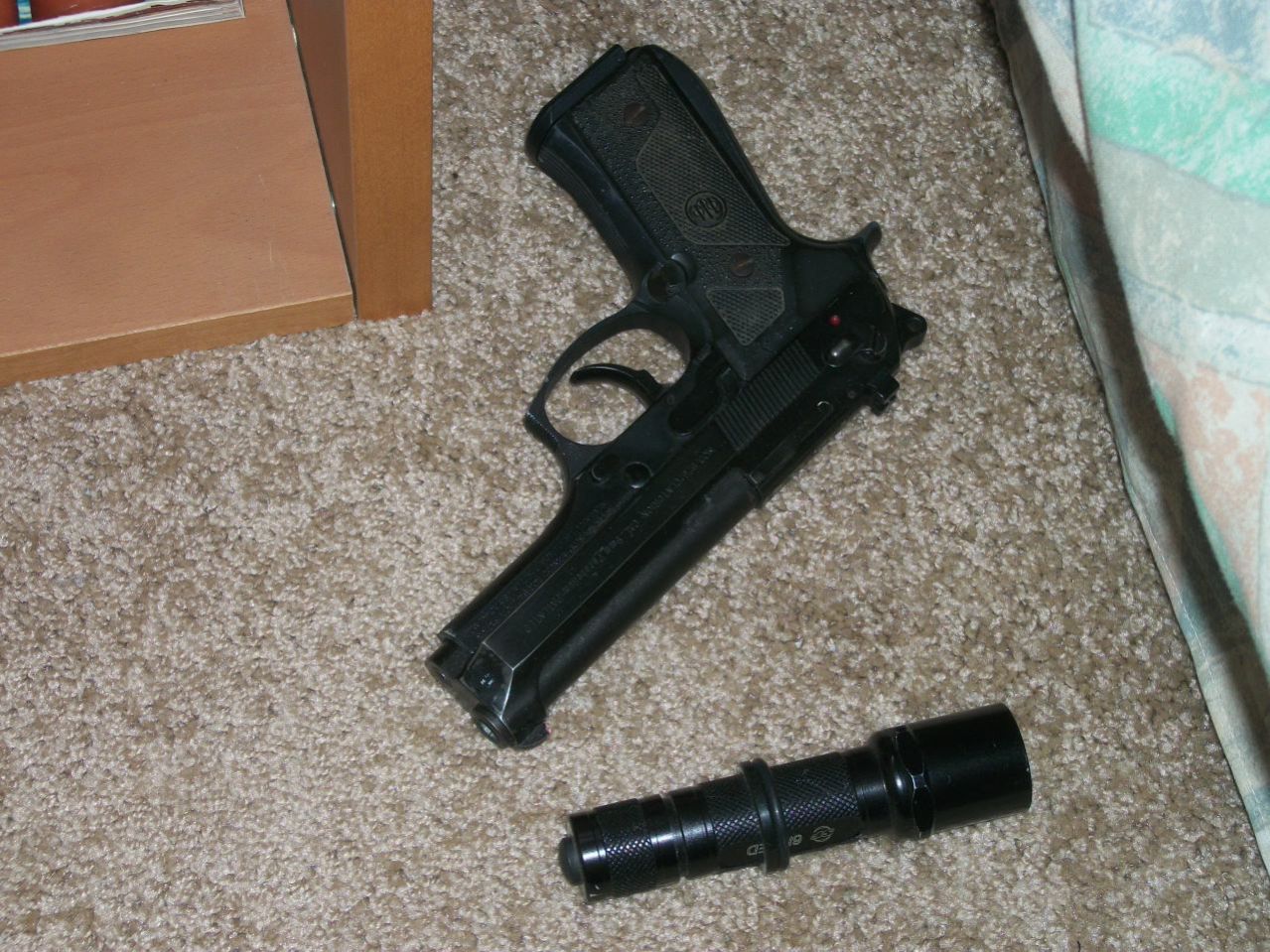
The training scar aspect was made apparent to me by a friend recently. He trains and practices quite a bit. When I mentioned about using a flashlight to identify someone at night, he said something that really disturbed me. “I don’t like to do that because whenever we do it in Force on Force exercises, the light draws enemy fire.” That may be a viable concern in military operations. But in the context of Armed Private Citizens and Law Enforcement Officers, we have an absolute obligation to know who we are shooting. My reply to him was “Show me the incidents where that has happened to an Armed Private Citizen because I can show you several incidents where using a flashlight would have prevented the wrong person from getting shot.”
From the practice standpoint, it means that you have to know how to work a flashlight and a pistol simultaneously. It also means you have to learn to verbalize and challenge an unknown person before shooting. In almost every incident of this type, a simple challenge such as “Who’s there?” would have prevented a tragedy. You don’t have to be in the Bureau to recognize a response like “It’s me, Daddy” as a clue.
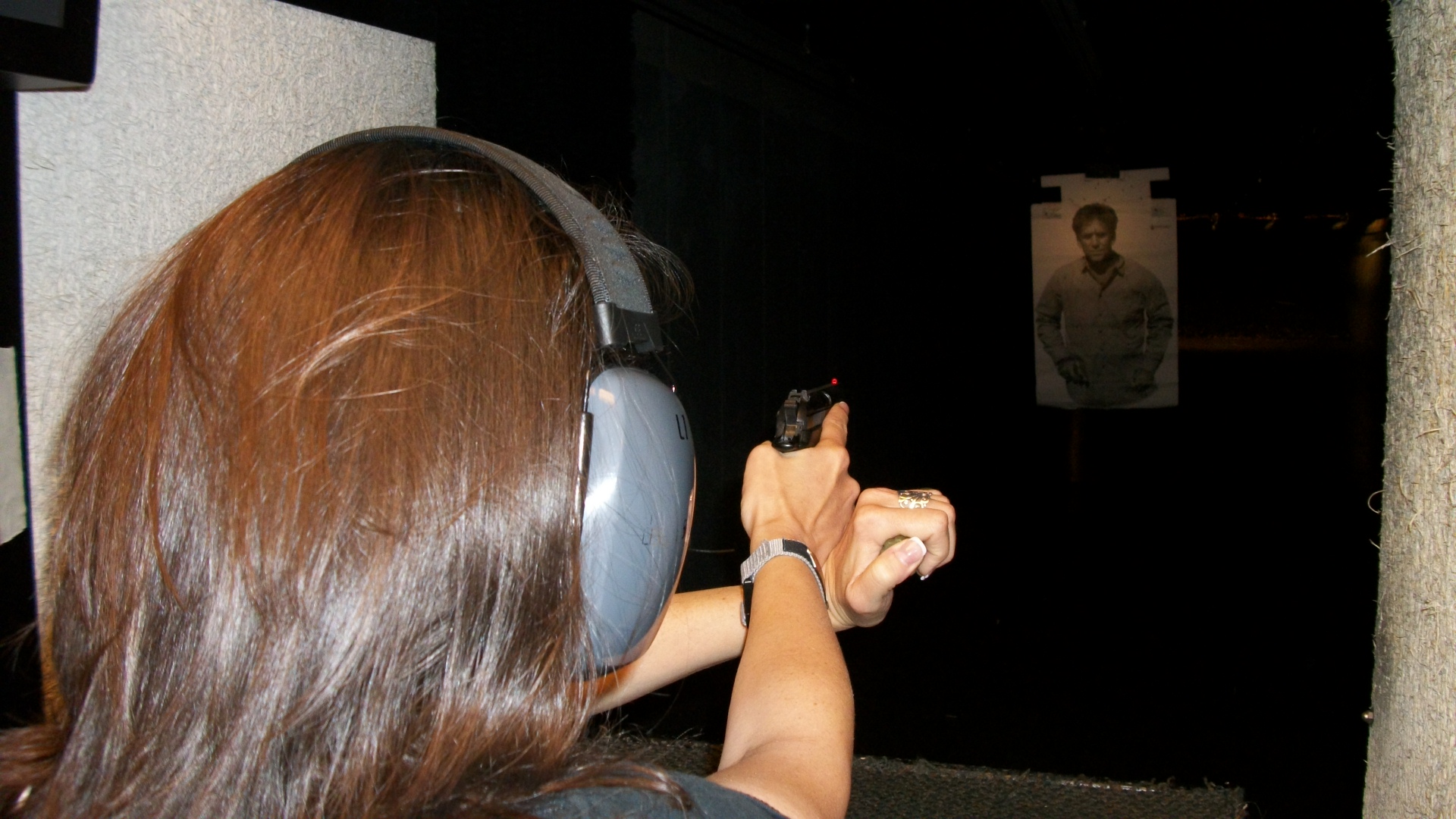
Get a flashlight. Decent ones are available for less than 10 dollars. Keep it next to your pistol at night. Don’t pick one up without the other, period. Incorporate a challenge into your range practice, along with learning to operate the flashlight and pistol simultaneously. The life you save might be someone very important to you.
Negative Outcomes: Self-Inflicted Gunshot Wounds (Part I)
This is the second installment of my Negative Outcomes series. I’ve already been taken to task for commenting about imprecise language and I understand where he’s coming from. The fact of the matter is, however, that we, in the instructional community, take a lot of our subject matter knowledge for granted.
Frequently, I hear comments to the effect that NRA courses go too much into depth about things like the individual components of ammunition, etc. I disagree with that completely. The influx of new gunowners requires that we educate them thoroughly. Many of the new owners have never operated any hand held device more complicated than an electric toothbrush.
As I commented to a student last night, I previously had a student in a class who was using a Sig pistol. He had owned and been shooting it regularly for almost two years. When I told him to ‘decock,’ he looked at me and said “What does that mean?” He had never used the decocking lever before and didn’t understand what its function was. He was actually a good shot, too. But elements of the pistol’s manual of arms had never been explained to him.
When dealing with deadly weapons, we can leave nothing to chance, including our vocabulary and students’ understanding thereof.
SCCY pistol update
So far, I have 175 rounds through the SCCY CPX-2 that they sent me for T&E. It had a Failure to Chamber on the fourth round I fired but no malfunctions since then.
I shot it at an IDPA match today and was able to do reasonably well (5th overall) against full size service pistols. One of the stages was a true El Presidente (10 yards with targets 2 yards apart). I finished 2nd on that one with an overall time of 11.73 (10.73 with 2 down).
The front sight now has 3M Reflective Tape on it and I was able to remove the horribly distracting white dots from the rear sight. The three dot system does nothing for me, especially the way most manufacturers implement it. One of my friends commented that the front sight is visible from behind the shooting line, i.e., in the peanut gallery.
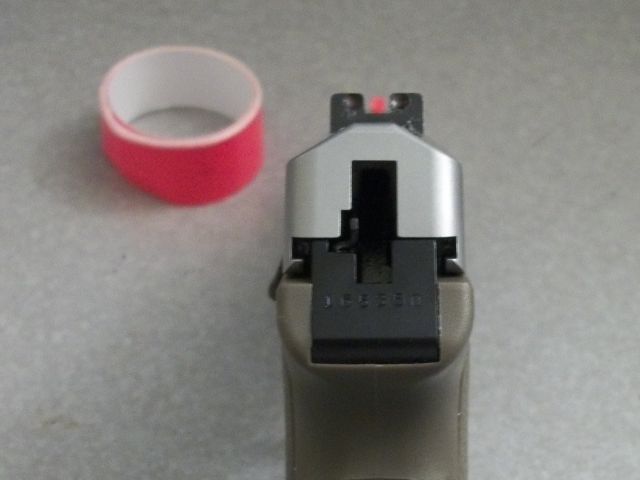
The trigger takes some getting used to because of the length of pull and reset. Shooters used to riding the reset/catching the link will probably not care for it. Flip and press works well though. I am not wild about it being flat all the way across and may do something about that.
Although the gun has noticeable muzzle flip, as might be expected from a 15 ounce 9mm, it isn’t painful to shoot the way I found the PF-9. It’s definitely more pleasant than shooting an LCP.
I did several tactical reloads and did not get pinched at all.
Yesterday, I shot the old FBI Double Action Course with it and was able to make 96%. This is properly shot on a Q target but I used an IDPA -1/-0 scoring zone. The pistol’s accuracy seems to drop off quite a bit past 15 yards. That’s something I will have to verify further.
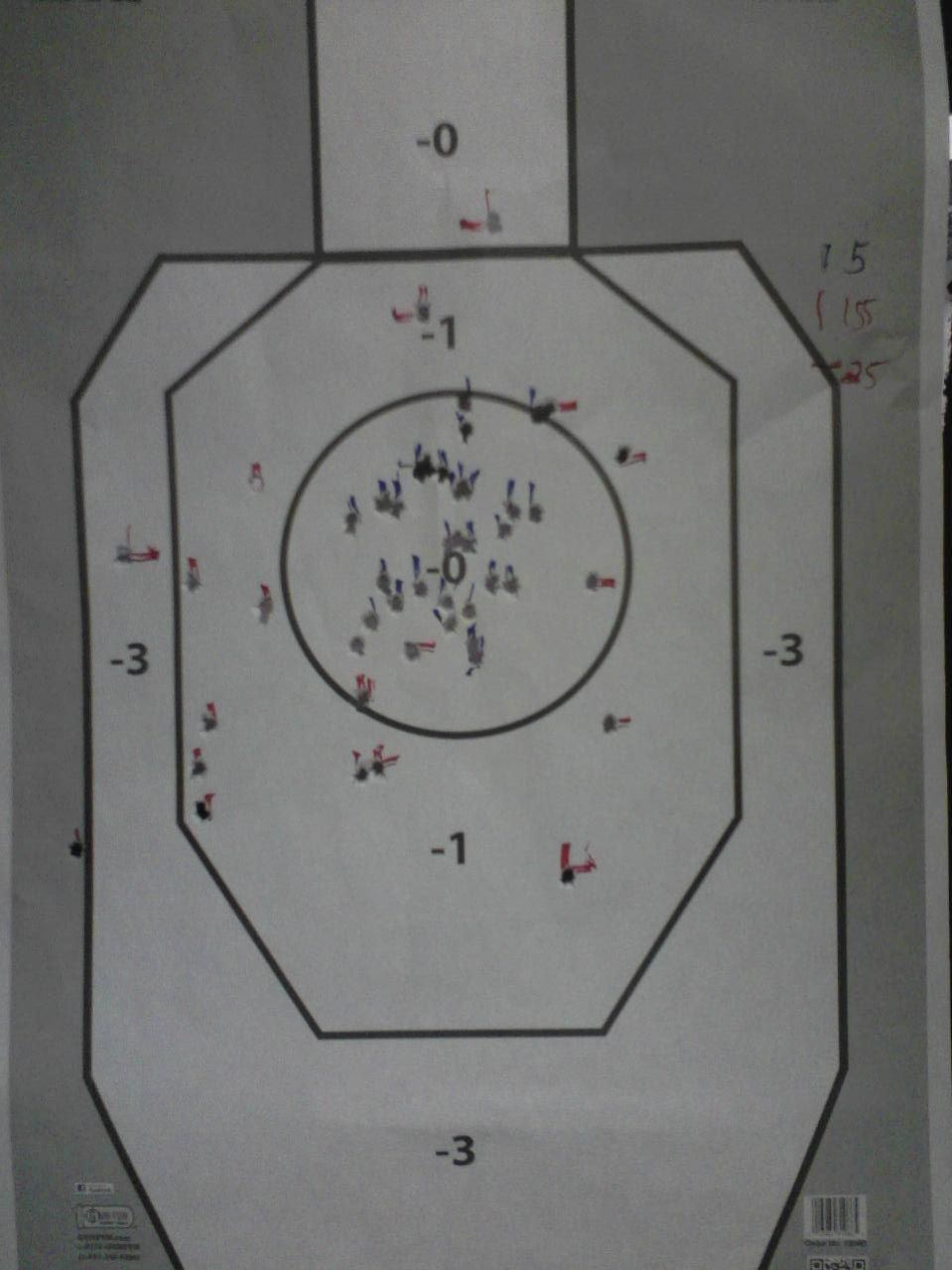
Most of my shooting with it has been with locally remanufactured ball ammo. However, I shot one stage today with Winchester 147gr SXT and had no problems.
So far, so good.
 tacticalprofessor
You must be logged in to post a comment.